
Search Pamlico County Court Records
Pamlico County court records are searched first through the NC eCourts Portal. Portal includes Smart Search, Search Hearings, Make Payments, and NC Judgment Search. It can be searched by party name, record number, citation number, attorney name, attorney bar number, business name, case cross-reference number, nickname, county, judicial officer, and courtroom. Portal requires JavaScript, cookies, a supported browser, and CAPTCHA checks about every ten minutes.
The online system is only one access channel. The Clerk of Superior Court keeps local court files, maintains courthouse self-service terminals, and handles paper files and copies. Criminal, civil, special proceeding, and estate case information may appear through terminals in clerk offices. Paper files are viewed in the county where the case is located. Divorce judgments must be requested from the clerk in the county where the divorce was granted. Birth, death, marriage, real estate, and most land records belong with the Register of Deeds, not the court-record file.
- Start with Portal Smart Search when a party name, case number, citation number, attorney name, business name, cross-reference number, or nickname is known.
- Use Search Hearings when the immediate need is a hearing date, courtroom, judicial officer, or calendar result.
- Check the Pamlico civil or criminal calendars if a session list or docket-style calendar is more useful than a single case result.
- If the file is missing, restricted, old, sealed, or needed for a certified copy, contact the Pamlico Clerk of Superior Court.
- Use the Register of Deeds only for marriage, vital, deed, and land-index records that are outside the court case file.
Pamlico County Court System
The NC Judicial Branch court-structure page shows that Pamlico County is part of one statewide General Court of Justice rather than a separate county court system.
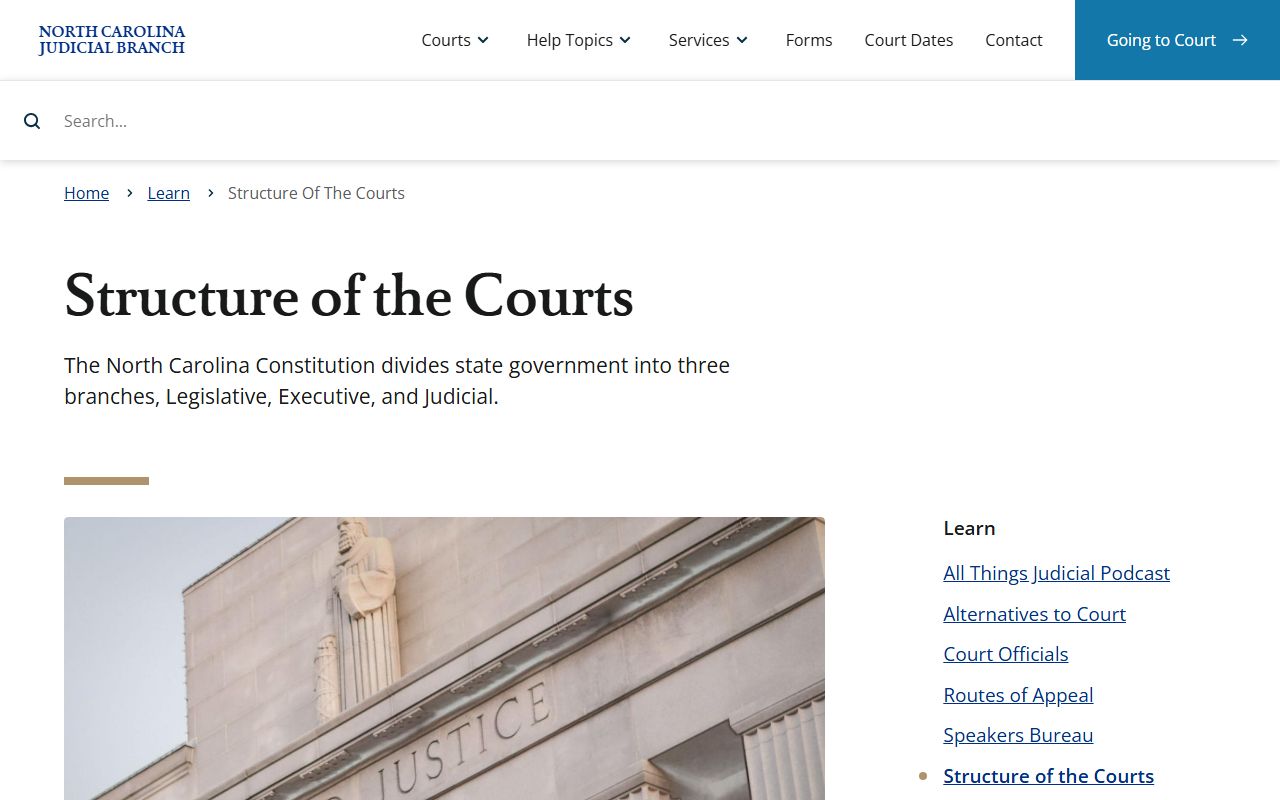
That statewide structure explains why Pamlico court records use North Carolina Portal and Judicial Branch calendar channels instead of a county-run case database.
The NC Judicial Branch types of courts page separates Superior Court, District Court, and magistrate functions that all affect Pamlico County court records.
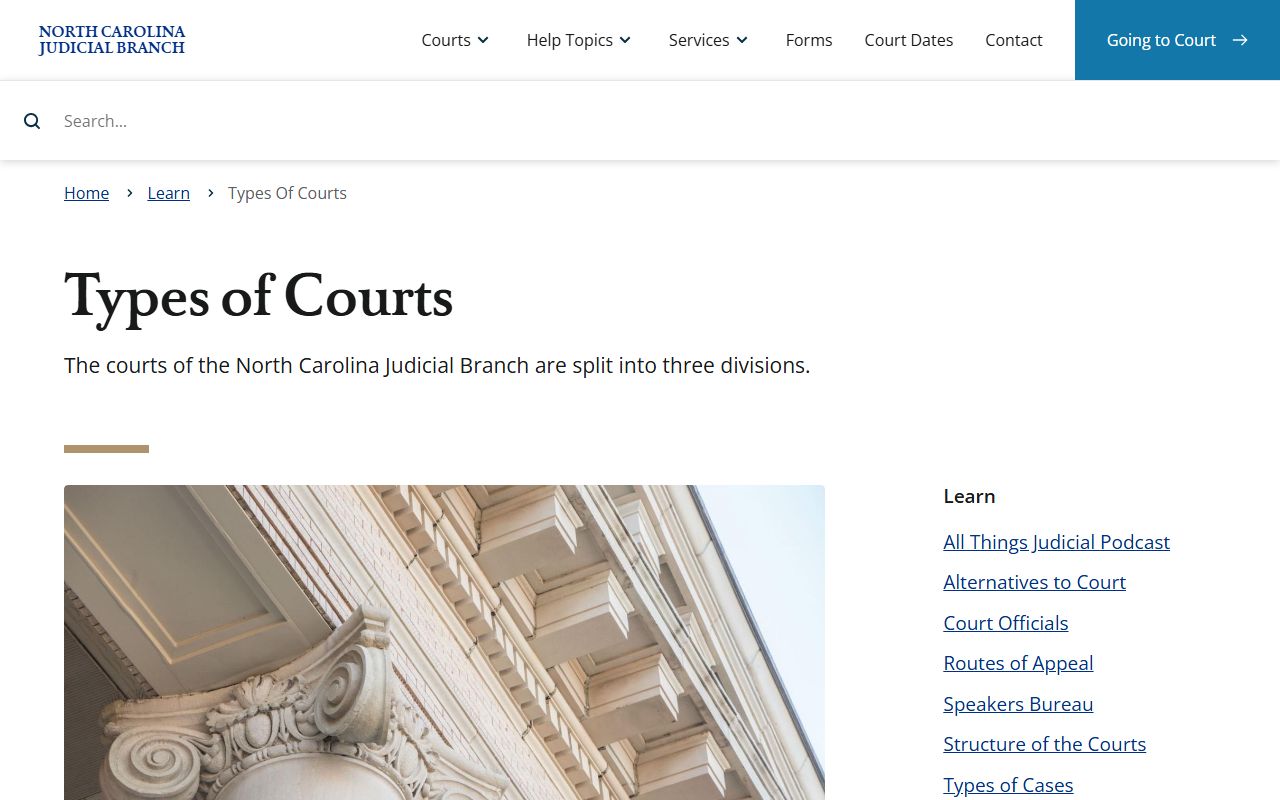
Those court-type differences matter because a felony case, misdemeanor, small claim, divorce, juvenile matter, or estate file can follow a different path.
Pamlico County Court Record Fields
Portal search fields are broad because the same tool serves case lookup, hearing search, payments, and judgment search. A person with a citation number should not search the same way as a person looking for a civil judgment or a hearing calendar. When a field is optional, using more than one known identifier can reduce false matches, especially when names are common.
| Field Label | Type | Required | Notes / Format |
|---|---|---|---|
| Smart Search | Text search | Unspecified | Party name, record number, citation number, attorney bar number, attorney name, business name, cross-reference number, or nickname. |
| Search Hearings | Search/filter | Unspecified | Case number, party name, business name, attorney name, attorney bar number, judicial officer, courtroom, county, and related hearing filters. |
| Make Payments | Payment lookup | Conditional | Eligible probation, parole, criminal, and infraction cases only. Payment eligibility controls access. |
| NC Judgment Search | Search/index | Unspecified | Judgment index search under North Carolina law. |
| Register / Sign In | Account action | Optional for basic use | Registered and elevated functions may require an account or attorney access form. |
| CAPTCHA | Challenge | When triggered | Required about every ten minutes for anonymous, registered, and elevated users. |
Pamlico County Court Record Types
The Superior Court page describes the higher trial court that handles felony cases, civil cases over $25,000, and appeals from District Court.
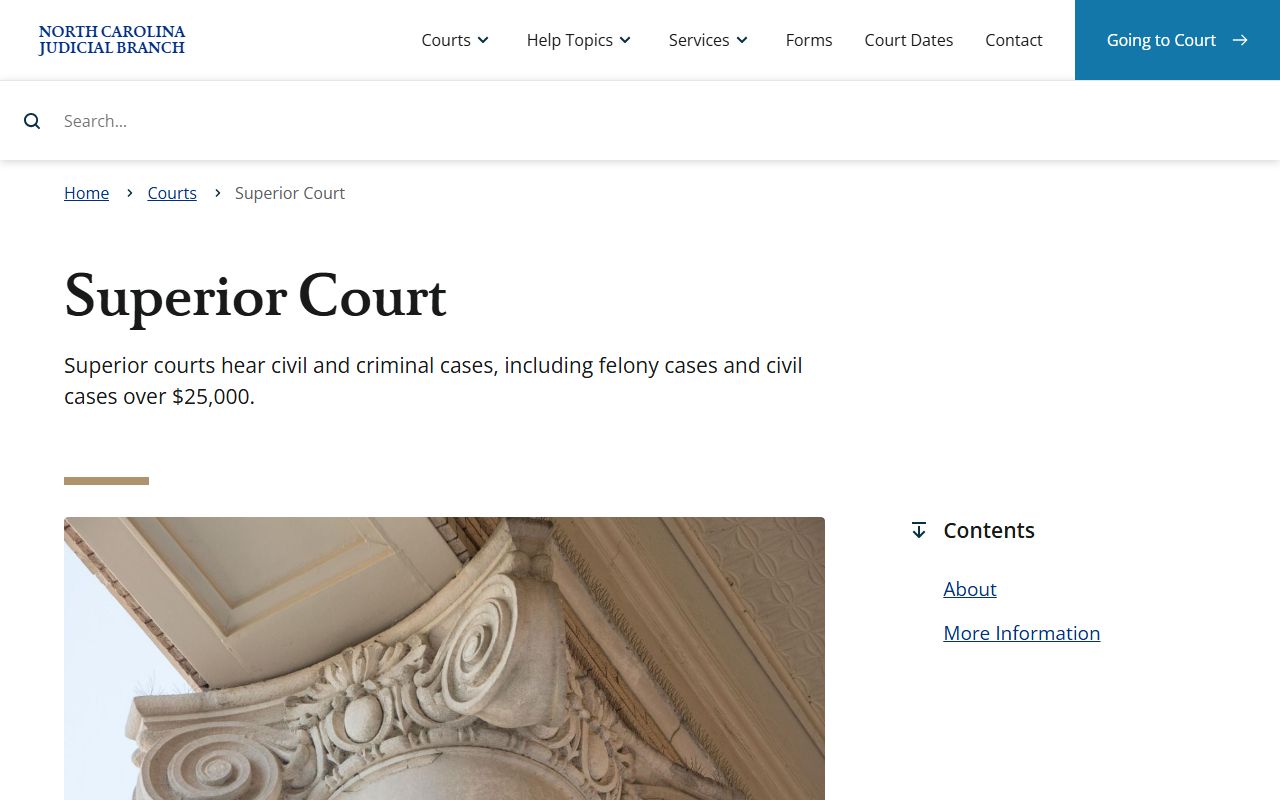
For Pamlico County court records, Superior Court is the key division for felony files and larger civil disputes, even though the filename for the local trial-court page remains district-court.html by project map.
The District Court page explains the division that handles misdemeanors, infractions, family matters, juvenile matters, small claims, and magistrate proceedings.
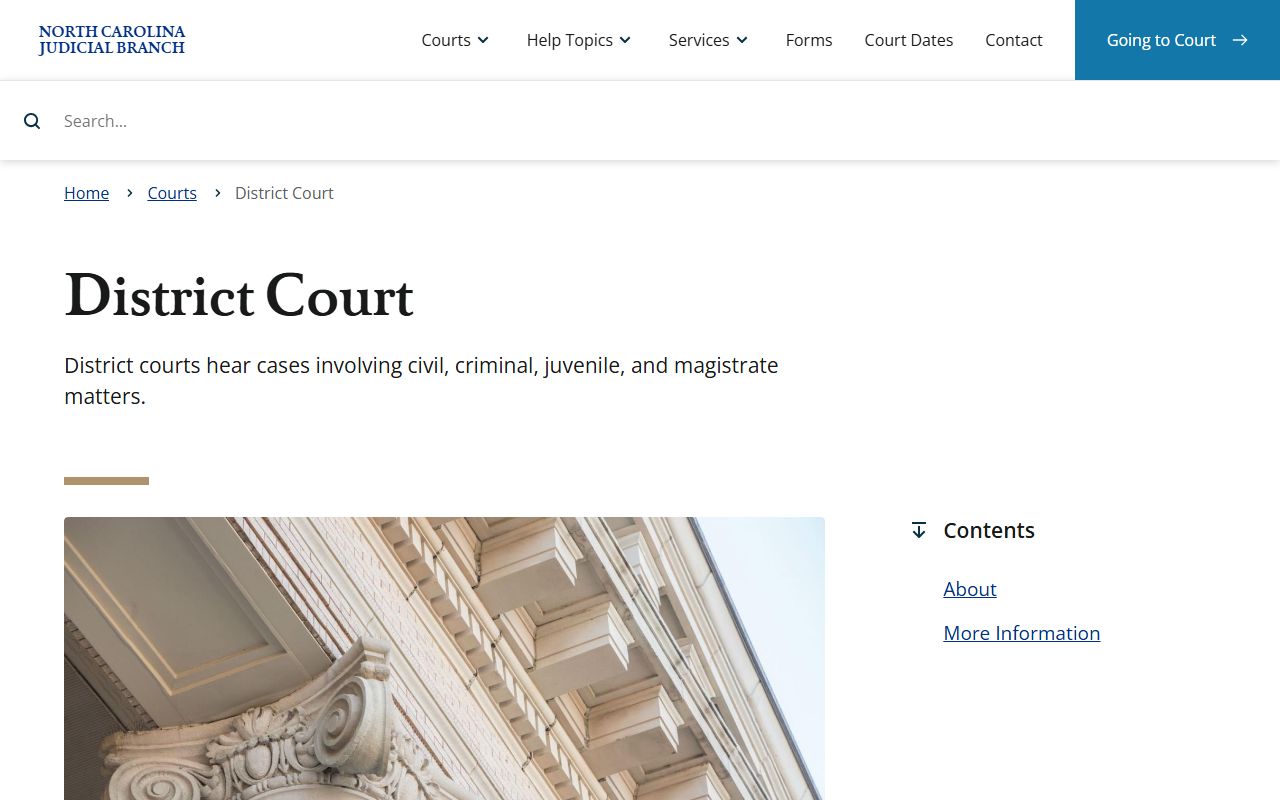
That lower trial-court work produces many high-volume Pamlico County court records, including traffic, misdemeanor, domestic, custody, support, small-claims, eviction, and juvenile-related entries.
- Civil records can include complaints, summonses, answers, motions, orders, judgments, costs, and calendar entries.
- Criminal records can include warrants, citations, summonses, indictments, charging documents, bond orders, pleas, dispositions, and sentences.
- Family records can include divorce, custody, and support filings, with child information often treated with care or restriction.
- Estate and probate records are handled by the Clerk of Superior Court acting as probate judge and estates clerk.
- Traffic and infraction records are District Court matters and can affect NCDMV records after final responsibility or conviction.
What Pamlico County Court Records Show
A public case result can be limited, but court records commonly show identifying and procedural facts. The record can tie together the county, court division, parties, case type, filing date, charge or civil cause, attorney information, scheduled hearings, docket events, orders, judgments, disposition, sentence, probation terms, bond, fines, costs, payment status, and document availability. Not every field appears in every case. Juvenile, sealed, expunged, adoption, protected mental-health, and confidential personal data can be absent or redacted.
| Field | What It Shows |
|---|---|
| Case Number | The unique record number used by Portal, clerk terminals, calendars, and copy requests. |
| County and Court Type | Whether the matter is tied to Pamlico County Superior Court, District Court, magistrate, or another court level. |
| Parties | Names of plaintiffs, defendants, petitioners, respondents, criminal defendants, businesses, or attorneys when public. |
| Filing or Event Date | When the case or docket event was filed, scheduled, continued, heard, or decided. |
| Charge or Case Type | The offense, citation, civil cause, family matter, estate issue, judgment, or special proceeding category. |
| Disposition | The outcome, such as judgment entered, dismissed, guilty, not guilty, responsible, or not responsible. |
| Costs and Payment Status | Eligible court costs, fines, fees, payment status, and online payment availability where supported by Portal. |
Pamlico County Court Records Access
The Chapter 132 public records index is one state-law source for North Carolina public records rules.
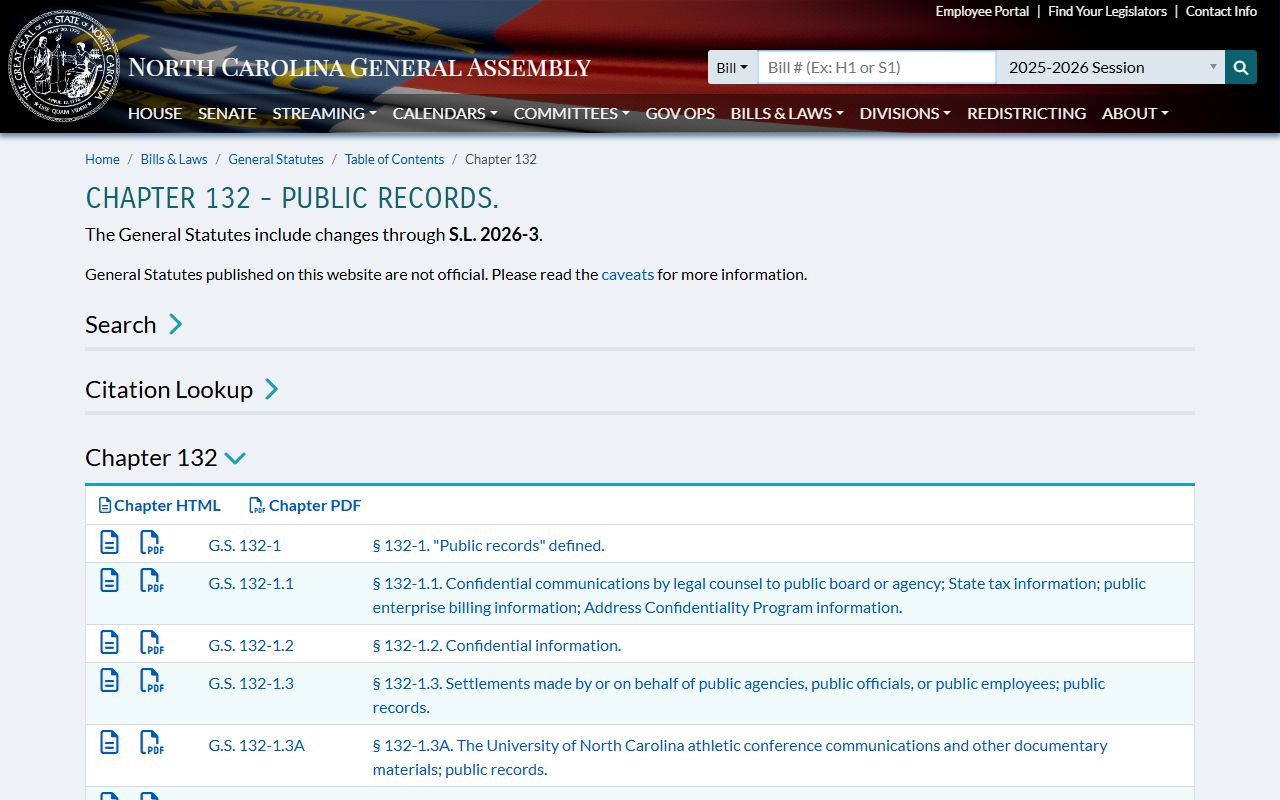
For court users, Chapter 132 supports broad access, but court files are still filtered through court rules, clerk procedures, Portal limits, and confidentiality laws.
The full Chapter 132 public records law states that public records and public information are the property of the people unless another law limits access.
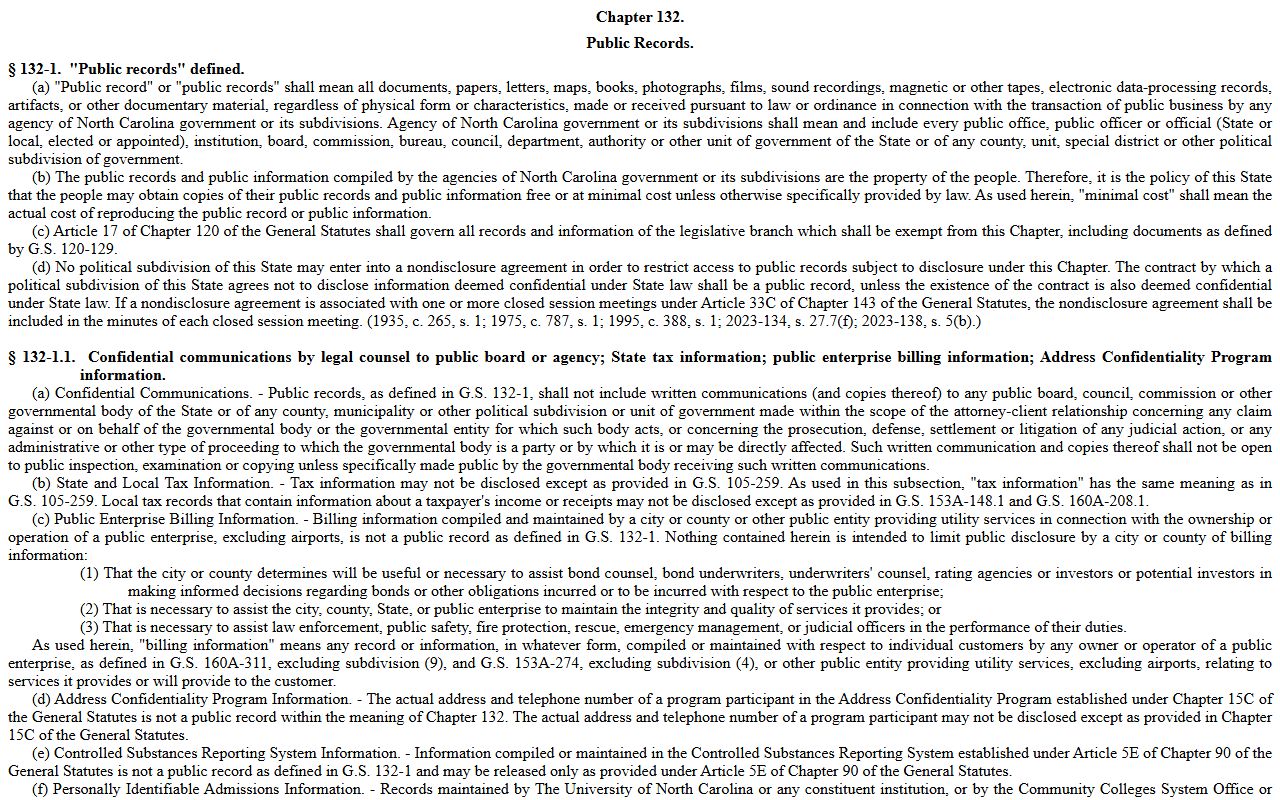
That broad rule does not make every court, sheriff, juvenile, adoption, mental-health, or investigative record public in the same way.
Practical access in Pamlico County starts online, then moves to the clerk if a user needs a paper file, certified copy, divorce judgment, background-check route, or record not visible in Portal. Copies may require a fee. Online payments may require processing fees, and Portal payments accept Visa, MasterCard, and Discover for eligible cases, but not digital wallets or eChecks.
Restricted Pamlico County Court Records
Not all Pamlico County court records are public lookup records. Juvenile delinquency, undisciplined, abuse, neglect, and dependency records are restricted under Chapter 7B. Adoption records are not ordinary public civil files. Mental-health proceedings, protected addresses, Social Security numbers, financial account numbers, minor names, and sealed material may be limited or redacted. Law-enforcement investigative files are not the same as court filings and can be governed by separate criminal investigation and recording laws.
Expunction can remove eligible North Carolina criminal records from ordinary public access. G.S. 15A-145.5 covers certain nonviolent misdemeanor and felony convictions, but the statute excludes many serious offenses and has detailed conditions. A person seeking expunction identifies the exact charge, disposition, conviction date, and county, then files the correct AOC petition with the Clerk of Superior Court in the county of conviction. If the order is granted, agencies are directed to expunge covered records.
Pamlico County Clerk Requests
The clerk office is the local access point for court records that need terminal search, paper-file inspection, certified copies, and staff routing. Pamlico County Clerk of Superior Court Steven E. Hollowell is listed by the county as the Clerk of Superior Court, Estates & Special Proceedings. Staff assignments include Superior Civil & Criminal, jury, special proceedings, estates, child support, and juvenile functions. The office is in the courthouse on Main Street in Bayboro.
Clerk of Superior Court
202 Main Street
PO Box 38
Bayboro, NC 28515
(252) 745-6600
Monday-Friday, 8:00 AM-5:00 PM
Bring the case number if known, plus the party name, case type, approximate filing date, and the kind of copy needed. For sheriff reports, arrest details, or investigative records, the sheriff or law-enforcement agency may be the better starting point. For real estate, marriage, birth, death, assumed names, and older land index searches, use the Register of Deeds instead of the clerk's court case files.